
The Red-necked Keelback (Rhabdophis subminiatus) is a widely distributed and fascinating species found across the lowlands and lower montane forests of Asia. Though often described as calm, this snake is crucial to study due to its complex and potentially lethal toxicity.
It belongs to the genus Rhabdophis and is a close relative of the well-known Tiger Keelback (Rhabdophis tigrinus).
Description
Distinctive Feature: The snake's common name is derived from the prominent red spot or patch located on the back of its neck, just behind the head.
Coloration: Adults typically exhibit a base of greenish-olive or dark green, with striking red and yellow markings near the head and neck.
Size: They reach a modest total length (including tail) of approximately 70 to 90 cm (27.5 to 35.5 in).
Maturity: As the snake matures, the color of its head may transition from a darker gray to a more distinct olive green.
Sexual Dimorphism: Notably, the female of the species is generally larger than the male.
Taxonomy
Kingdom: AnimaliaPhylum: Chordata
Class: Reptilia
Order: Squamata
Suborder: Serpentes
Family: Colubridae
Genus: Rhabdophis
Species: Rhabdophis subminiatus
Habitat
They occur across Bangladesh, Indonesia (Sumatra, Borneo, Java), Thailand, Vietnam, Laos, Myanmar, West Malaysia, Bhutan, Nepal, and large parts of India (Tripura, Assam, Meghalaya, West Bengal, Sikkim, Arunachal Pradesh, Mizoram, Nagaland). Their preferred environments include marshes, swamps, wet grasslands, rice fields, ponds, and rivers.
Venom
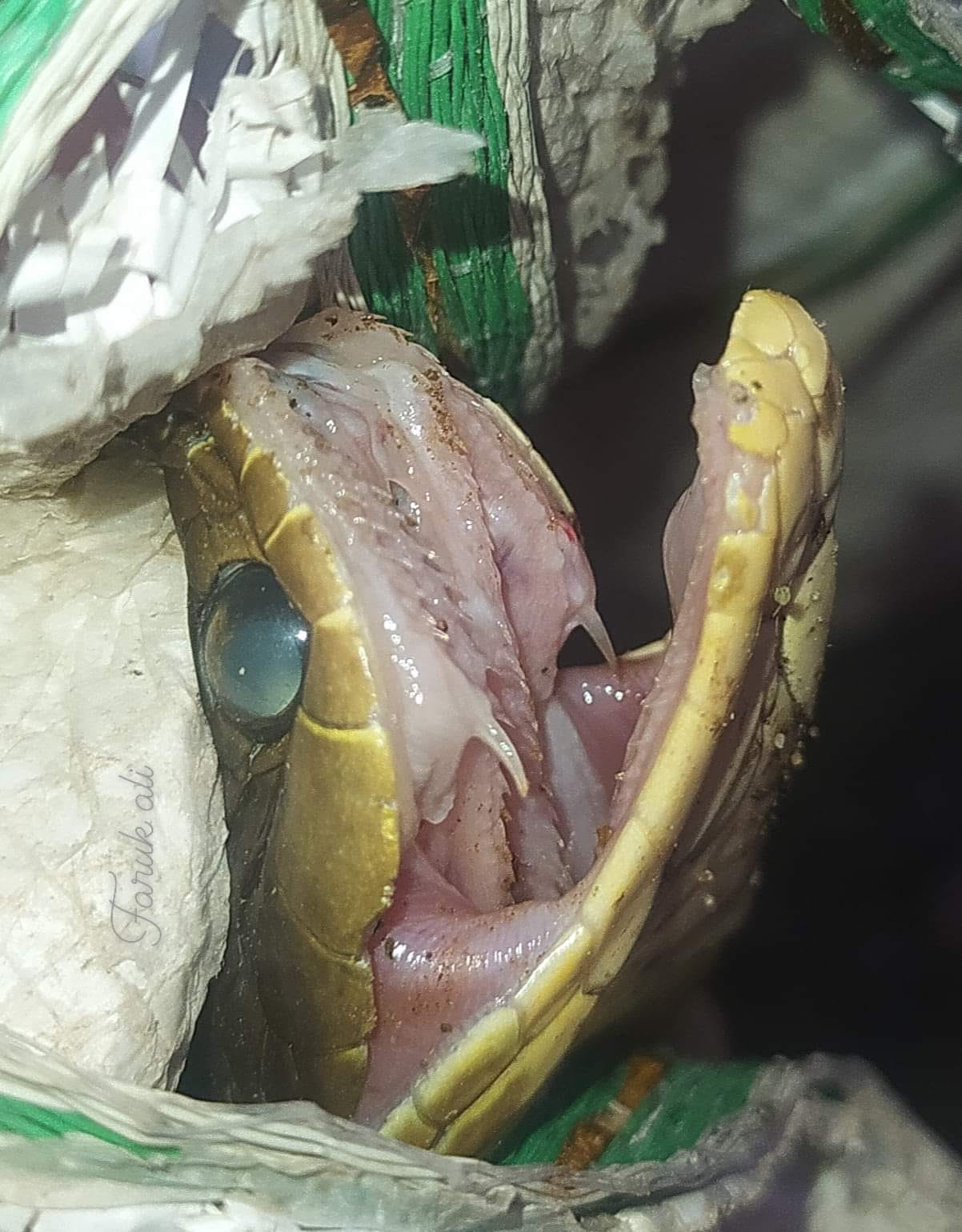
They are highly venomous, delivering potent haemotoxic venom comparable in lethality to that of the boomslang. No specific antivenom is available except the Anti-Yamakagashi (Tiger Keelback) antivenom. Their front fangs do not inject venom; instead, they possess rear fangs linked to the Duvernoy’s gland. They must chew to deliver venom, which historically led to the misconception that they are harmless.
Poison
Their poison—bufadienolides—comes from consuming toxic toads. This was proven experimentally: individuals from regions without toxic toads, or fed non-toxic diets, lacked these chemicals. They possess two specialised nuchal glands; when threatened, they inflate their neck and release the toxins.
Average Lifespan
Approximately 10 years.